








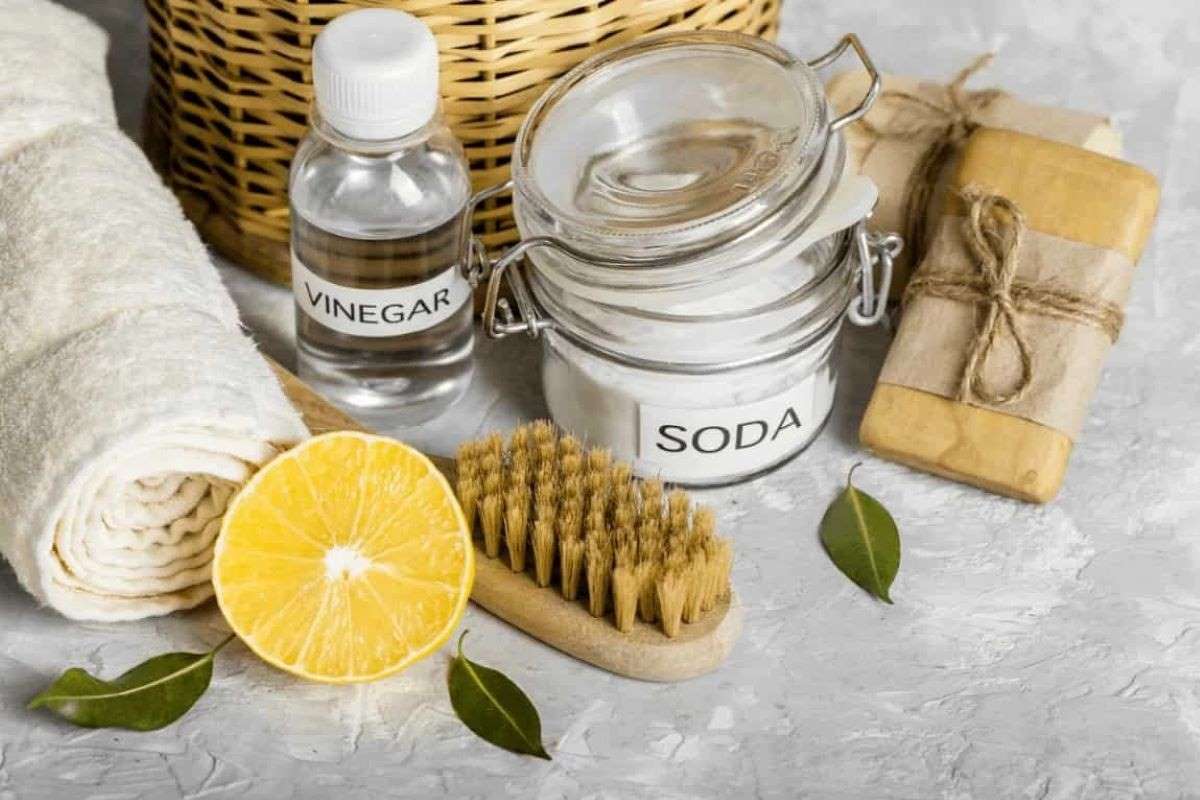
When it comes to washing produce, how do you do it in your household? A random search online will reveal several hacks recommending baking soda and vinegar for household cleaning. Cleaning here does not mean kitchen surfaces alone, which hack gurus have confirmed plausible, but for fresh produce. Vinegar and baking soda are available in the average kitchen and are believed to be suitable for cleaning pesticides and germs off farm produce. So, it becomes reasonable to find out the take of food safety authorities on how to ensure fruit and vegetable hygiene in home kitchens.
Before following the recommendations of that TikTok kitchen hack, find out what scientific perspectives are. Read this piece to the end to distinguish evidence-based food cleaning relative to social media-fueled kitchen myths.
Why People Use Vinegar and Baking Soda on Farm Produce
The widespread reportage in mainstream media is that virtually all farms now grow food using artificial additives. Likewise, there are fears that meat cuts contain contaminants like bacteria and antibiotic residues and that crops are laddened with pesticides and toxins.
These fears have driven consumers of farm produce to devise various DIY hacks to rid their fresh food of contaminants. While some are ingenious enough to come up with a regimen for washing produce, some just pick any off social media.
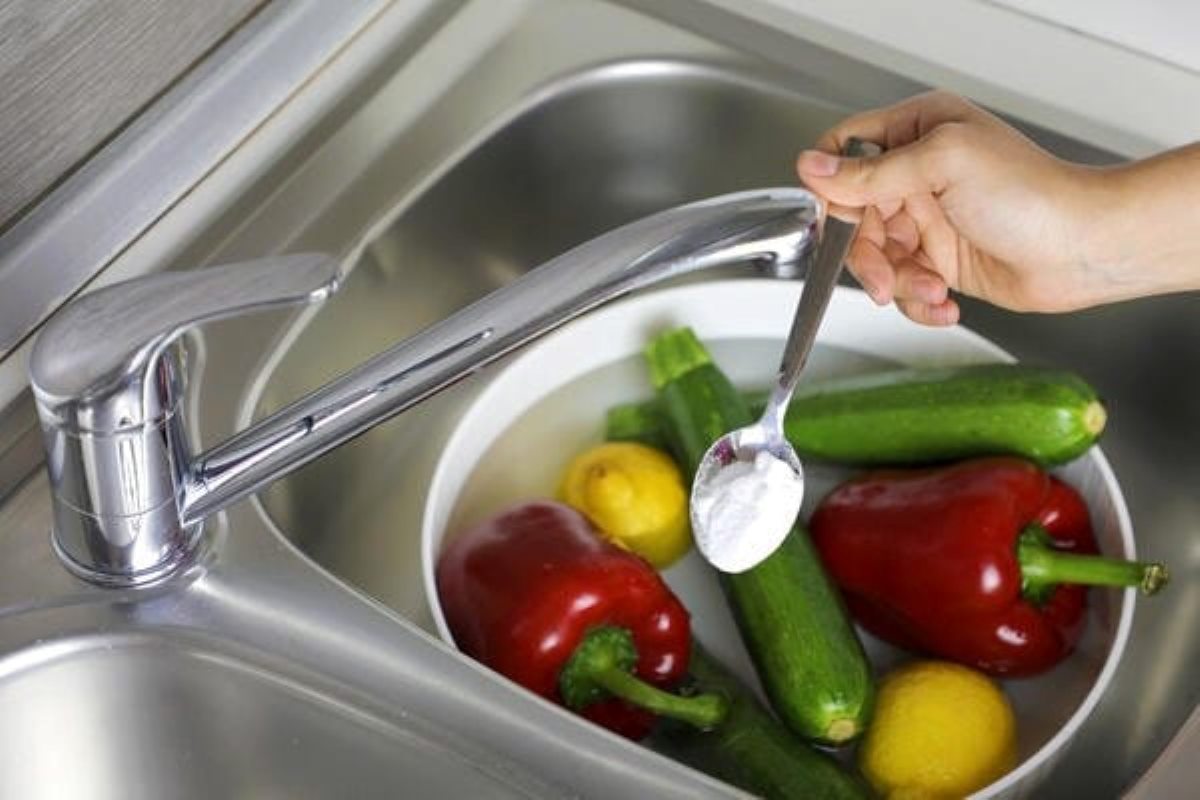
Over the years, washing produce like fruits and vegetables with potable water was enough to make them safe for consumption. Indeed, even the Food and Drug Administration takes a similar stand on fruit and vegetable hygiene. However, multiple converging factors have caused the health consciousness of most folks to peak. For instance, more people are becoming less confident in the effectiveness of plain water for produce washing safety. Consequently, overthinking health-related decisions, not just food hygiene, has become commonplace.
ALSO READ: Misleading Food Labels: How to Decode the Claims Marketers Use
What’s Actually on Your Fruits and Vegetables?
The necessity of cleaning fruits and vegetables before consumption should not be an object of debate. For produce that is minimally processed before consumption, it is necessary to at least clean the food. Doing this reduces the possibility of ingesting adhering contaminants. For most fruit and vegetables, the culpable contaminants are usually concentrated on the surface.
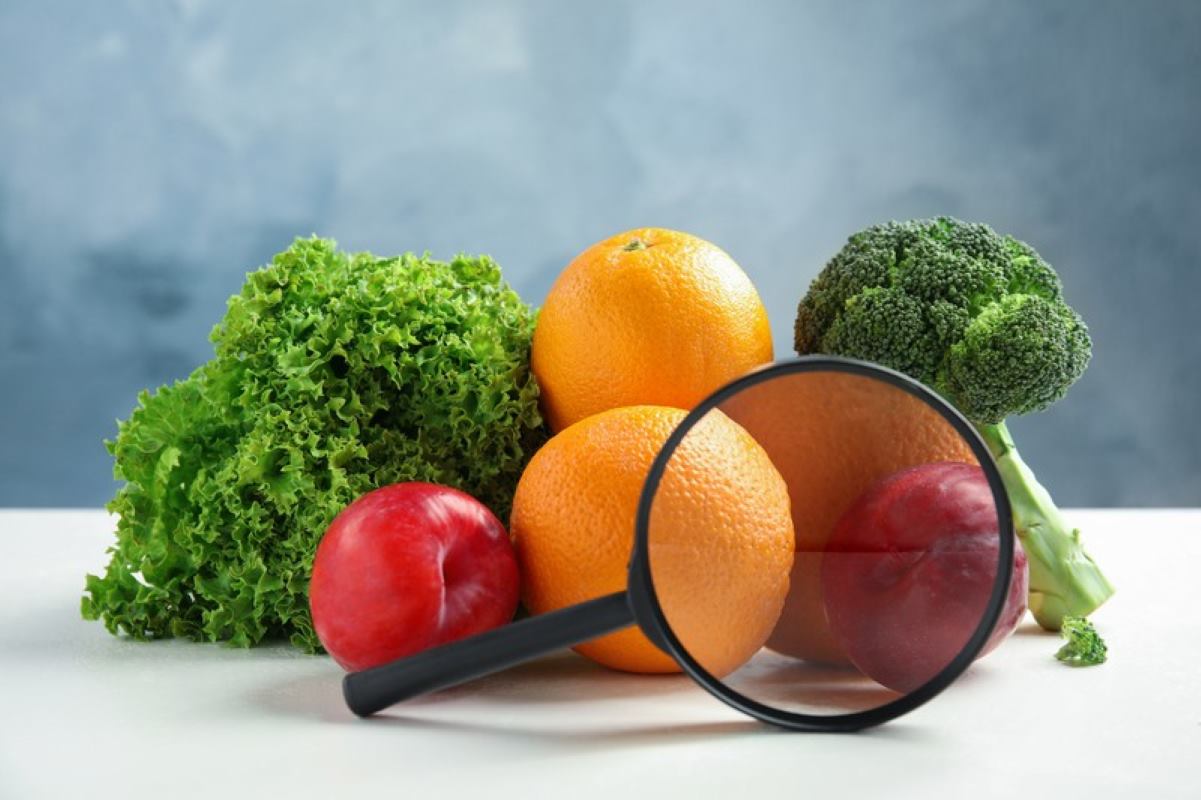
Some of the contaminants that necessitate the washing of fresh produce are:
- Pesticide residues: To protect crops and maintain high yield, most farmers are constrained to protect their investments using pesticides. Post-harvest activities on the farm seldom ever involve pesticide residue removal. So, it becomes the end user’s responsibility to eliminate pesticide residues.
- Surface bacteria and soil-borne microbes: Microorganisms, as their name implies, are so small that viewing them with the naked eye may be impossible. Those in the environment settle on hanging fruits and vegetables, while those in the soil adhere to tuber crops.
- Wax coating: Wax coating often serves as a protective layer for produce. However, it sometimes harbors the very contaminants that end users want to eliminate when washing produce.
Vinegar Wash: What It Can and Can’t Do
Vinegar wash is often touted as the holy grail of produce hygiene. While it is effective in some contexts, it has a couple of constraints that will be spotlighted in this section. But first, an explanation of why vinegar wash produce is sometimes effective.
Vinegar is produced by fermenting fruit juice into alcohol, and later into acetic acid. So, your bottle of apple cider vinegar is predominantly acetic acid. Meanwhile, most bacteria don’t thrive well in an acidic environment. To reduce the microbial load of foodborne pathogens, washing produce with vinegar is usually very effective.

However, vinegar is ineffective for removing pesticide residues. Also, it is not an outright substitute for disinfectants. Finally, there’s the issue of flavor invasion. If, for instance, you have a strict benchmark for how your salad should taste, you should avoid washing the veggies with vinegar. Sometimes, the harsh nature of concentrated acetic acid may damage the produce.
Baking Soda Wash: What the Research Shows
Then there’s baking soda! Multiple studies have discovered that baking soda (sodium bicarbonate) is effective for pesticide removal from produce. Albeit, these studies also suggest that the quoted efficacy is only true for surface pesticide residues. Consequently, washing your fresh fruits with baking powder does not remove pesticides that have been absorbed by the produce tissues. Similarly, the very act of rubbing sodium bicarbonate to eliminate surface contamination may also cause the loss of beneficial bioactive compounds.
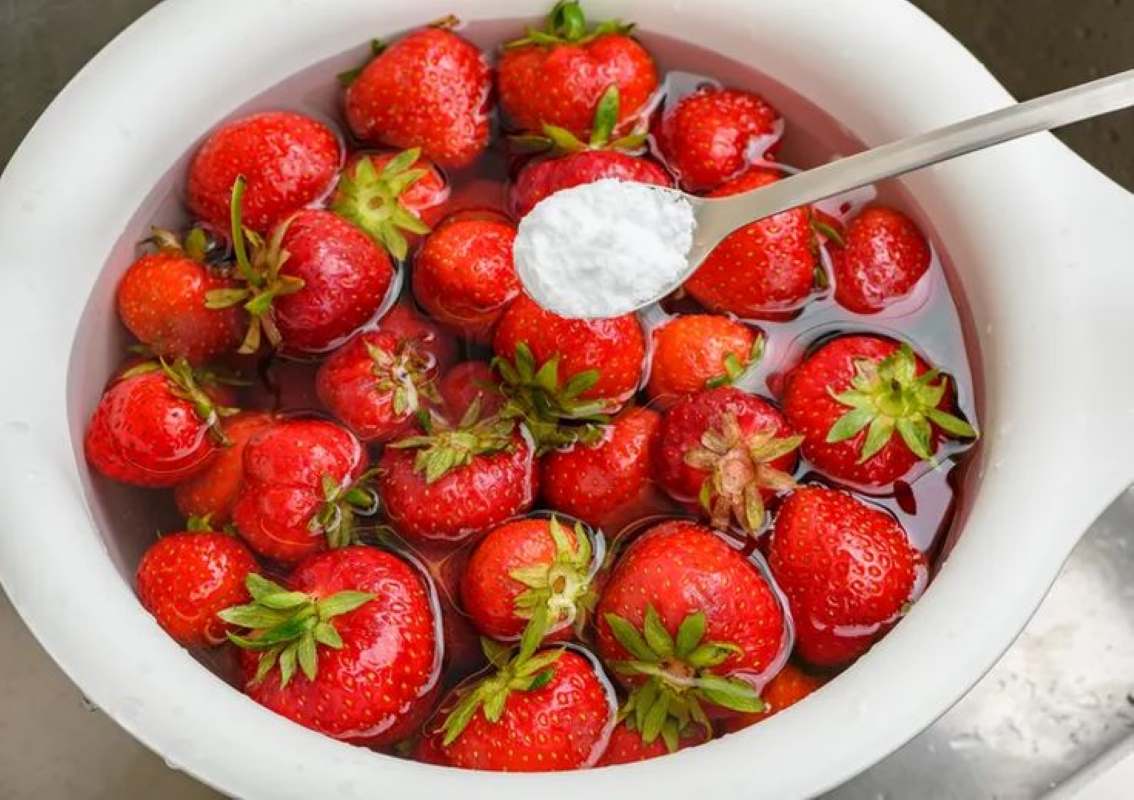
Unlike vinegar, baking soda is alkaline and largely ineffective against foodborne pathogens. Also, according to Healthline, baking soda is most effective for washing produce when allowed to soak for a while.
Why Soap, Detergents, and Bleach Are a Bad Idea
Did you find some stubborn stains on the apples and carrots you bought from the farmers’ market? It may seem like a no-brainer to wash those off with regular cleaning agents like bleach, detergent, or soap. However, food regulatory bodies strongly advise against doing so. For one, while trying to eliminate surface contamination, you may end up with chemical residues on your fruits and vegetables. Secondly, the chances are high that the chemical components of these domestic cleaning agents may penetrate the produce’s tissues.
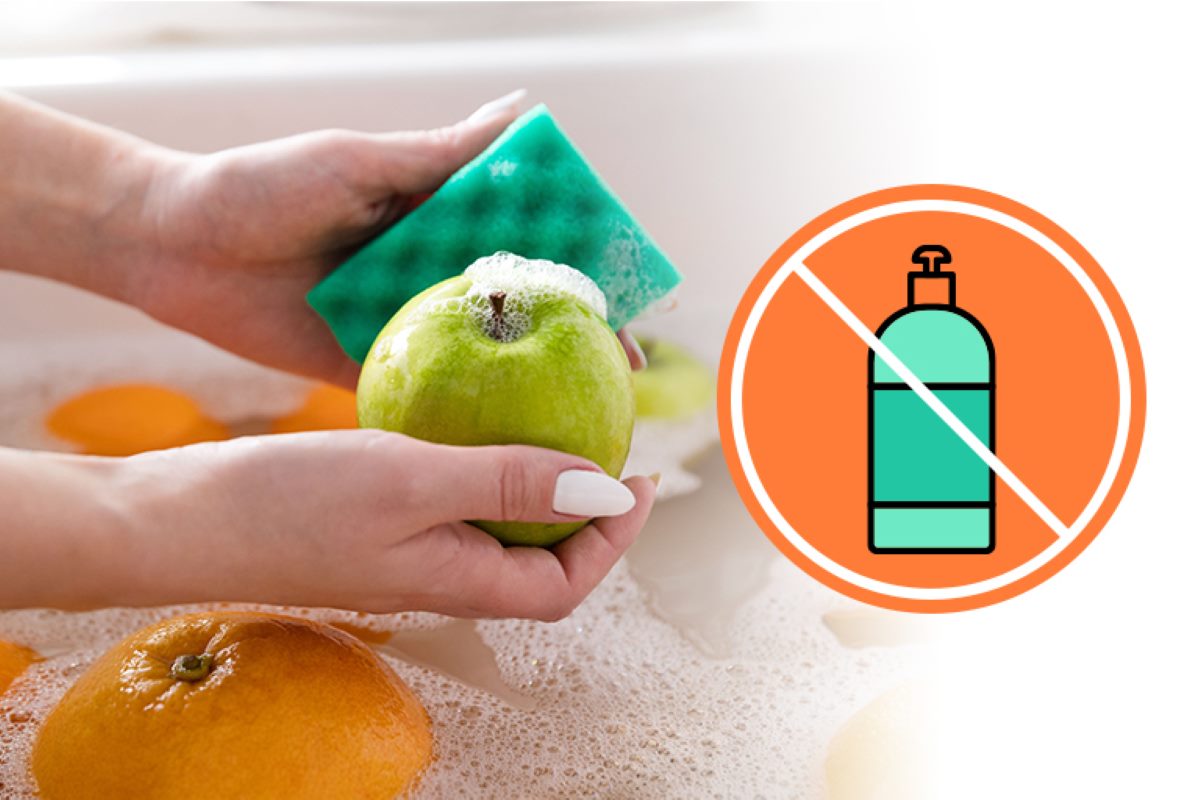
Exposure to the chemicals in these cleaning agents has been established as causing health hazards. For instance, the Food and Drug Administration warns that washing produce with chemical-based agents could make you sick.
ALSO READ: Regenerative Aquaculture: Can Fish Farming Heal the Oceans?
5 Recommendations on Produce Washing by Food Safety Authorities
Multiple food safety authorities have set forth multiple produce washing safety guidelines. The interesting thing about these kitchen food safety tips is that they agree on how to wash vegetables safely and maintain produce hygiene.
The following are guidelines on produce washing safety, as prescribed by safety authorities:
1. Sanitize Food Contact Surfaces
Cross-contamination is a major cause of foodborne illnesses in kitchens. So, it’s best to always sanitize surfaces before unpacking your produce from the grocery bag. Your hands will also handle the produce. Consequently, it is needless to say that they should be cleaned with soap and water.
2. Rinse Produce Under Running Water
According to the FDA and Oregon State University’s National Pesticide Information Center (NPIC), washing produce under running water often does the trick. Don’t use soap or any chemical cleaning agent. Where the produce is firm enough, scrub or rub with your palm or a clean brush for effective washing.
3. Handle Delicate Produce Cautiously
Some fruits have tender skin; likewise, the leaves of some vegetables tear easily. According to the National Institute of Food and Agriculture, an arm of the USDA, it is advisable to wash all fresh produce. Cut off damaged or bruised parts and discard the outermost leaves of vegetables like cabbage.
4. Avoid Washing Pre-washed Produce
You bought a pack of pre-packaged salad from the store, and it is labeled “ready-to-eat,” “triple-washed,” or “pre-washed.” Washing such produce may do more harm than good. So, dispense such directly into the serving plate or container, rather than exposing it to cross-contamination during extra washing.
5. Pat Produce Dry After Washing
Drying your produce with a clean paper towel after washing can help to remove the remaining surface microbes.
Close
At first glance, handling and washing produce may seem like a walk in the park. Also, while the goal of this piece is not to raise unnecessary alarm, it spotlights often-ignored food cleaning tips. By now, you’ll find it easy to sidestep food safety myths that paint sodium bicarbonate solution and vinegar as magical solutions. Yes, they are very effective in certain scenarios of produce cleaning. However, by a long shot, using a steady stream of potable water is the best bet for cleaning most fresh produce.
ABOUT THE AUTHOR

Babatunde Olufemi is a food scientist, educator, and science-based food writer with academic and practical exposure to food processing, nutrition, food safety, and the global food industry. Through Quill of Grubs, he breaks down complex food science topics into clear, accessible explanations for everyday readers, students, and professionals.