






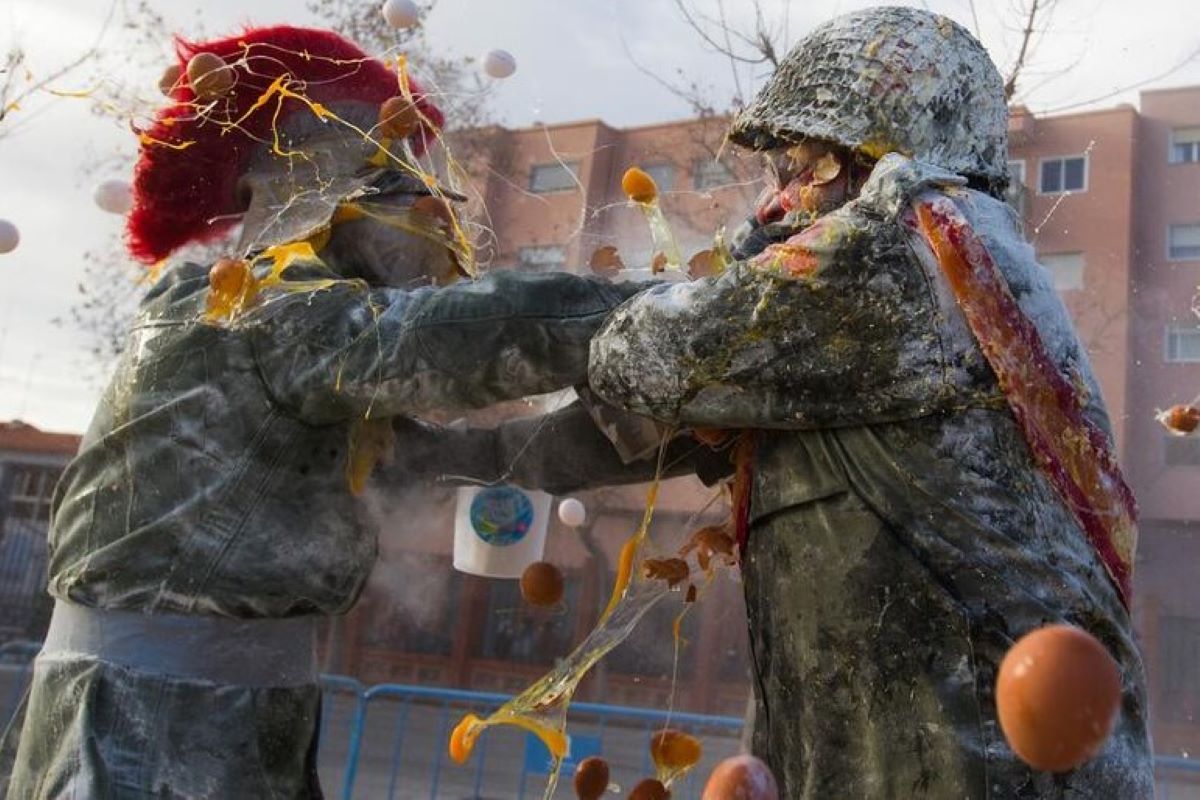
The Els Enfarinats festival will be a bizarre experience for most first-time visitors to the town of Ibi. Imagine yourself choosing the Spanish city of Alicante as the destination for a year-end vacation. However, during a tour of the city, you walked into a town called Ibi. You found a mob, all dressed in military regalia, attacking one another with flour, eggs, and firecrackers. The only cue likely to allay your fears of stumbling into a local unrest would be the pockets of media personnel covering the event.
This piece will provide a detailed narrative of what happens in the Spanish town of Ibi during its Els Enfarinats festival. Read on, with an open mind, to learn about this historic and unconventional annual event.
What Is Els Enfarinats?
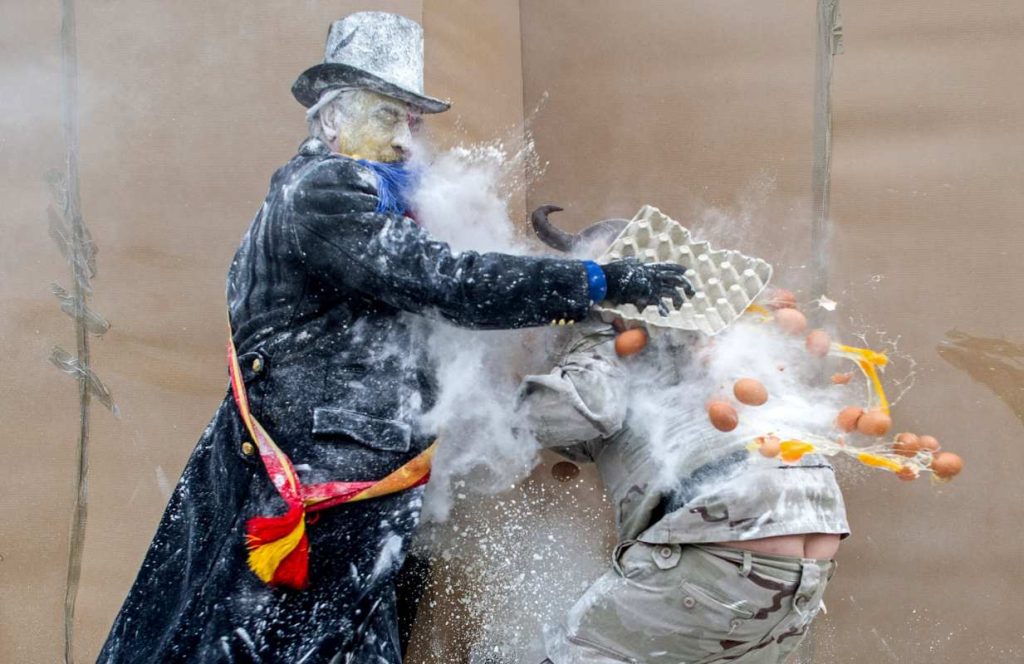
Els Enfarinats is a Spanish festival that tells a 200-year-old story through enactments and food symbolism. The Spanish term ‘Els Enfarinats’ translates literally to ‘the floured ones.’ It is a direct representation of what happens during the bizarre celebration where participants shower one another with loads of bread flour. The correct Valencian pronunciation of the festival’s moniker is [elz aɱfaɾiˈnats].
Ibi, the ‘ground zero’ of the Els Enfarinats festival, is a coastal town in the Spanish province of Alicante. The rich historic culture and gay beaches of this region make it a magnet for tourists from far and near. A 2009 census pegged the town’s population at 24,000, making it a quiet and serene place.
The date of the flour festival Spain coincides with the celebration of the Feast of the Holy Innocents. This Feast is a commemoration of the slaughter of newborn male babies by King Herod, in an effort to kill the newborn Jesus. Consequently, the Feast of the Holy Innocents and the Els Enfarinats festival converge on the 28th of December.
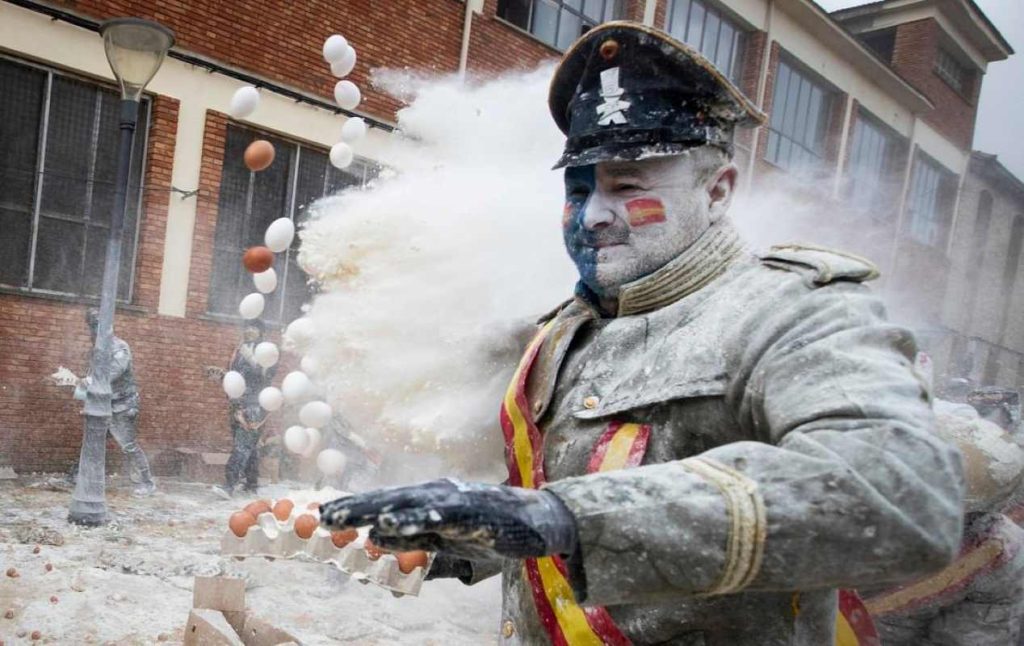
During anarchic festivals of Els Enfarinats, participants are mostly locals who understand the event’s cultural symbolism. These participants often split themselves into groups. The ‘Els Enfarinats’ group are the one who don military regalia, paint their faces, and stage a mock coup. The “L’Oposicio” represent the opposition group, who fight to restore order and the old system of governance. A third group, ‘Casats i Fadrins’ tour Ibi throughout the day, accompanied by traditional musicians. In recent years, social media has made the Ibi Spain festival globally popular. Consequently, international news correspondents often visit Ibi to cover the December 28th carnival chaos.
ALSO READ: The Business of Diwali Snacks: How Indian Food Brands Cash In on the Festival of Lights
Historical Origins: From Medieval Satire to Modern Survival
There are widespread claims that the Els Enfarinats festival is about two centuries old. There is no clear-cut evidence to substantiate the 200-year perpetuity claim; however, several theories affirm its validity. For instance, historians have established parallels between Els Enfarinats and ancient Roman Saturnalia celebrations. During the Roman festival, elites and slaves would switch roles, leading to the setup of a mock government.
Another theory suggests that Els Enfarinats is a product of medieval food fight traditions in Europe. The Feast of Fools stands conspicuously as a good example of such a medieval tradition. This Feast involves widespread inversion of social order and merrymaking.
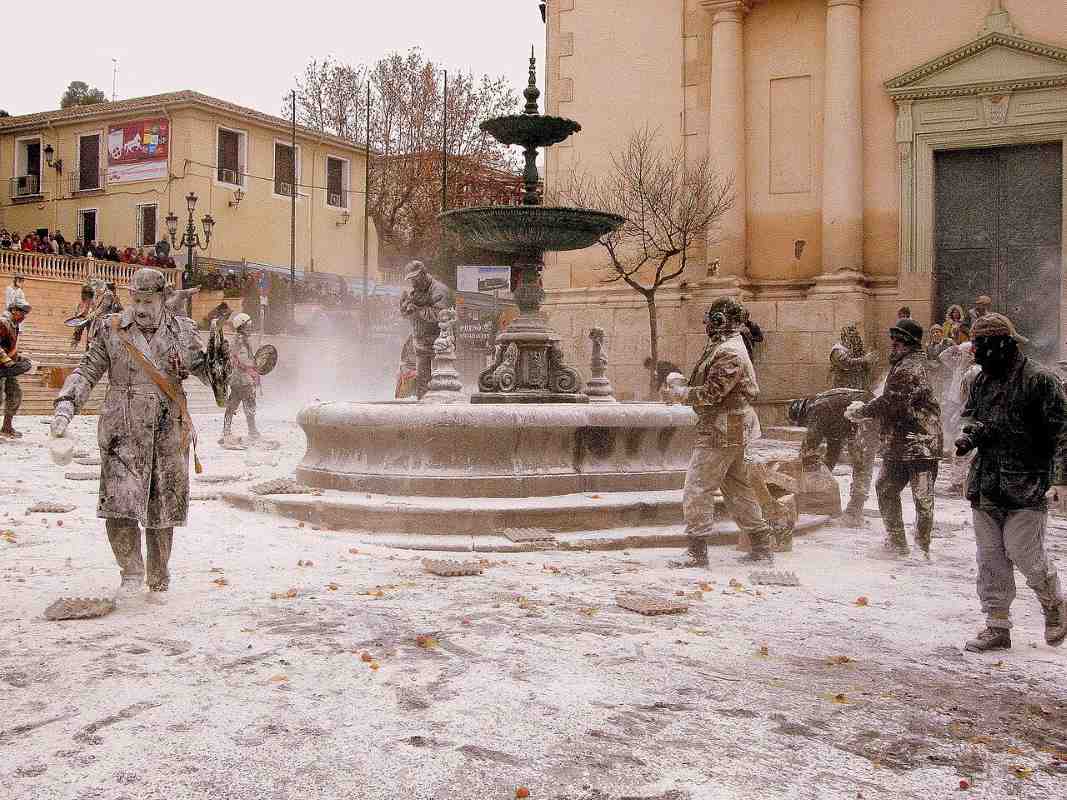
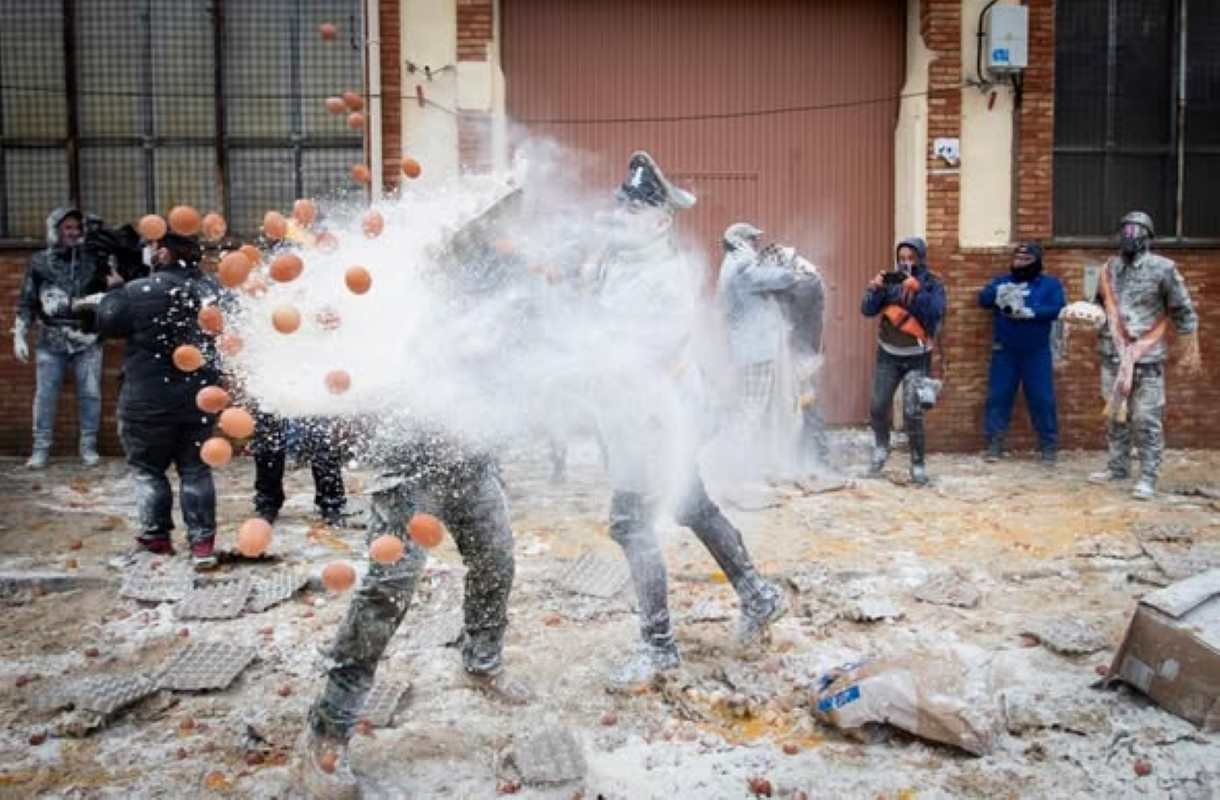
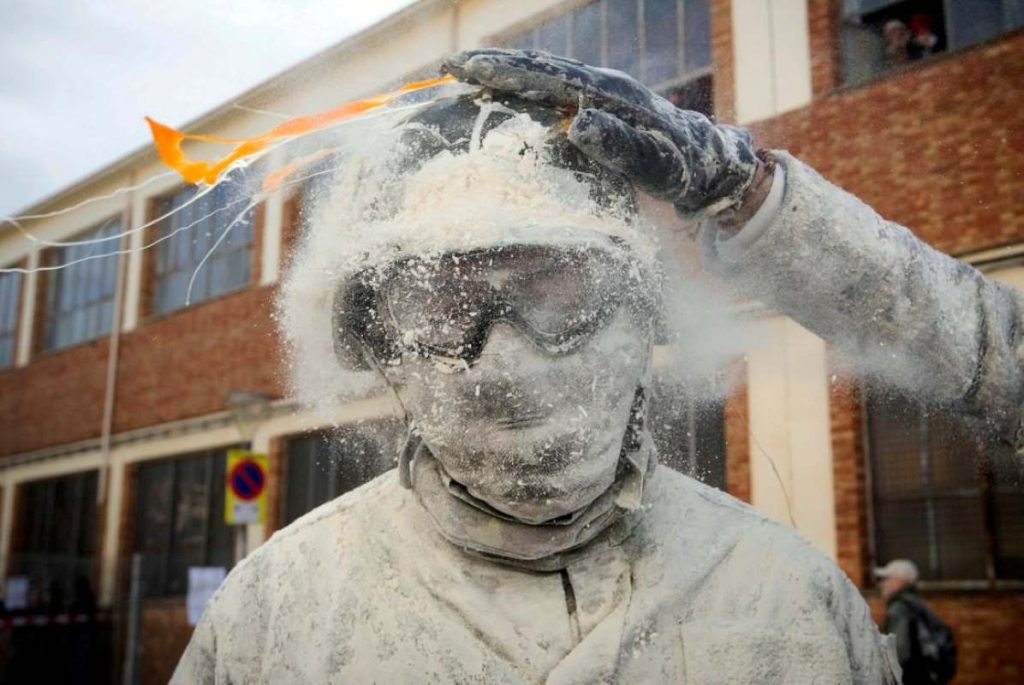
The high point of the modern Els Enfarinats celebration involves married men staging a mock coup. Consequently, they institute and declare unrealistic laws, and enforce them by imposing fines on defaulters. Decadents, ‘the L’Oposicio,’ rise to push back on the unsavory regime. The fallout of this opposition is a mock uprising that involves the use of eggs, flour and firecrackers as weapons. No one knows for sure if this annual reenactment is a parody of true events that occurred in the past.
The average reader will agree that the theme of this Ibi Spain festival has strong political undertones. This explains its ban in the 1950s, during General Francisco Franco’s rule over Spain. The flour festival in Spain was not revived until 1981.
Is the Feast of the Holy Innocents (Childermas) and the Els Enfarinats Celebration Related?
There are no direct connections between the Els Enfarinats festival and the Feast of the Holy Innocents. The date of observing the two events only happens to coincide for Spanish celebrants. In the Catholic Church, December 25 is the agreed-upon official birth date of Jesus. Consequently, the church extrapolated King Herod the Great’s manhunt for baby Jesus as commencing three days after Christmas. That sort of explains why the Church celebrates the Day of the Holy Innocents on December 28, in memory of the innocent infant boys who were killed.
However, despite the day coinciding with a mourning feast, Catholics in Ibi often participate actively in the flour rituals of the day. According to the Encyclopedia Britannica, medieval convents and monasteries marked the day with religious inversions. For instance, the youngest nun or monk in a priory was allowed to lead on that day. Similarly, children were allowed mock authority in the home, like deciding the meal of the day. However, the Council of Basel of 1431 cancelled these practices, ruling them as unreligious.
The Enfarinats: Who Rules the Town for a Day
The Valencian cultural festivals on December 28 start at 8 am and end at 5 pm on the same day. The Floured Ones rule the town for a day by commencing the mock coup in the morning. As explained in previous sections, the Els Enfarinats, all married men, gather at a designated point in Ibi early in the morning. At the rendezvous, they elect a mayor and agree on the fictitious laws to roll out during the festival. Anyone caught breaking the fictitious laws will have to pay a fine. As a mark of the petty nature of the anarchic festival, all monetary proceeds of fine enforcement go to local charities.
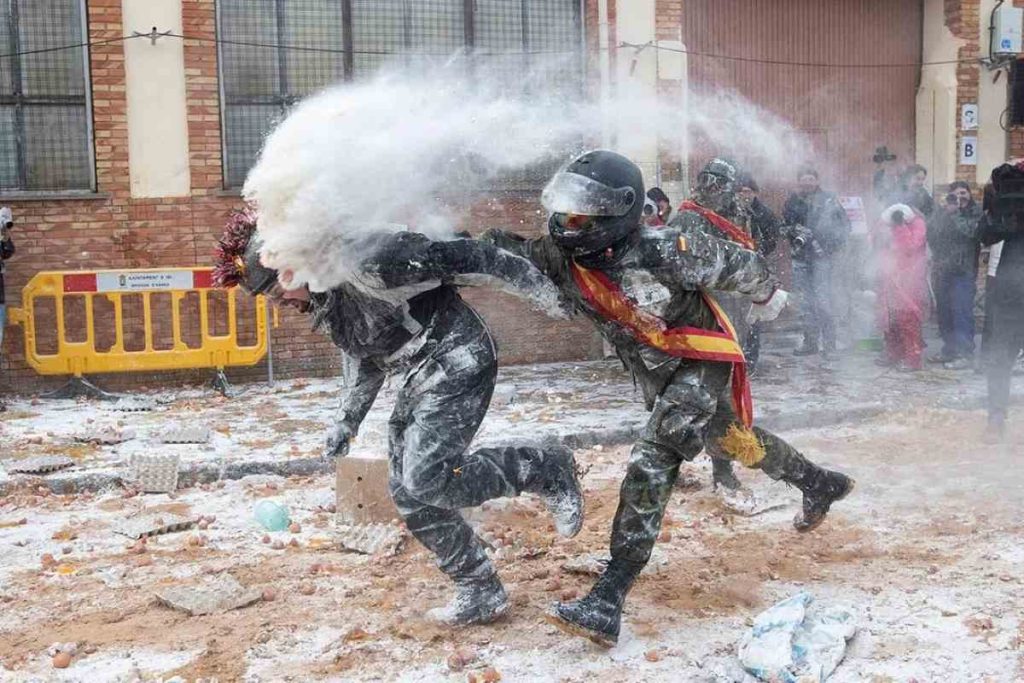
The Els Enfarinats parade themselves around town for most of the morning. Meanwhile, the mock governance usually faces a pushback from the mock opposition (La Oposicio) around midday. This period marks the most interesting and eventful part of the Els Enfarinats festival. It is often at this point of the celebration that camera lenses go clicking away, as flour, eggs and fireworks fill the air.
Ritualized Chaos: How Disorder Is Carefully Controlled
Timing is one of the foremost checks on the dramatized carnival chaos of Ibi town. The authority and ritual inversion by the Els Enfarinats hold sway between 8 am and 5 pm on the designated day. Also, festival stakeholders often designate the different roles of participants before the celebration. The Els Enfarinats festival is a grounded event, and Spanish law enforcement is aware of the one-day mock governance and its accompanying carnival chaos.

There are no records of actual crime spikes during the annual festivity, possibly because it is a townwide celebration. Towards evening, the mock Mayor of the Enfarnats grants permission for the commencement of a traditional ballroom dance. This usually marks the end of the carnival chaos. The Spanish anarchic festivals are brought to a close by a communal cleanup exercise, where volunteer crews wash away the flour and egg litters on the streets.
Gender, Authority, and Participation
Judging by the historical roles established for the Els Enfarinatas festival, it is a male-dominated event. The Els Enfarinats, La Oposicio, and traditional musicians are expected to be populated by married men.
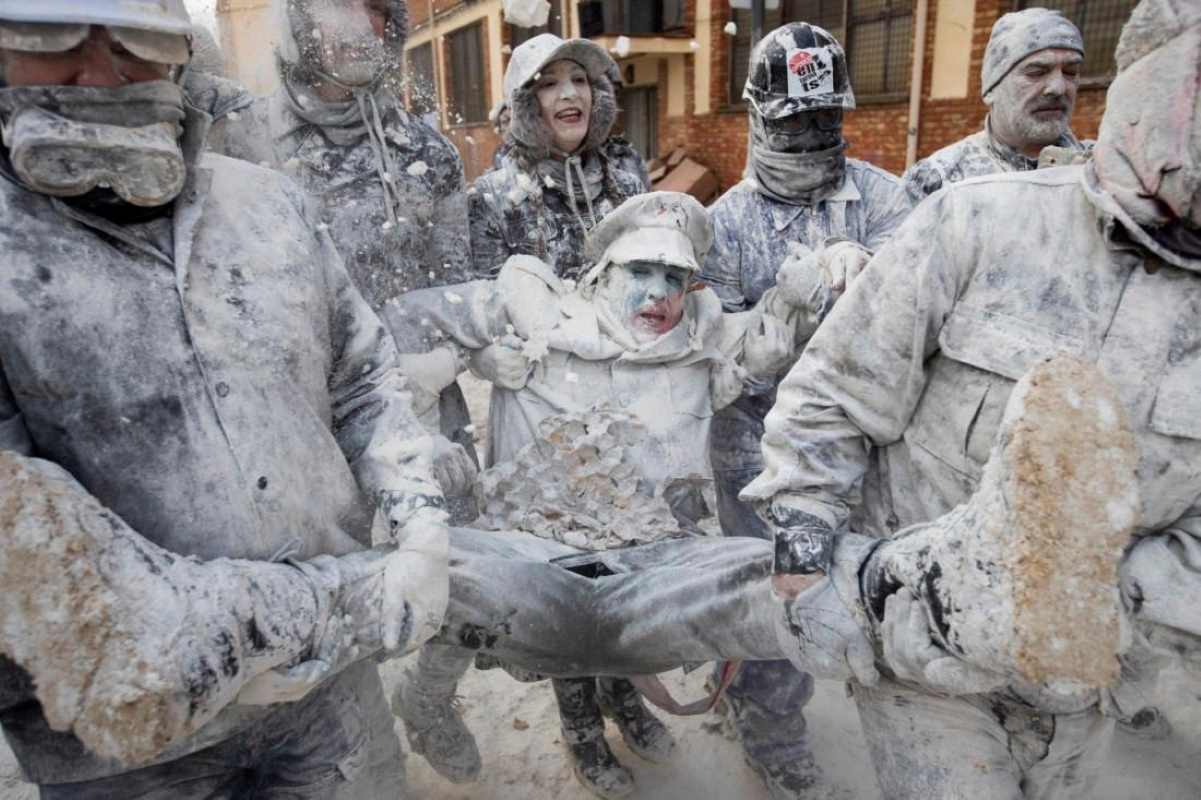
However, over the years, the evolution of social norms has led to the relaxation of gender-specific rules. It is now commonplace to find women actively participating in the day-long festivities.
If you’re a tourist visiting Ibi during Els Enfarinats, it is best to stand by and spectate. Of course, adequate protection against flying eggs and flour may need to be handy for even spectators.
Economic and Community Impact
It is needless to say that the Els Enfarinats have made the quiet town of Ibi a noteworthy travel destination. Photo-sharing platforms and social media have made the December 28 event a global sensation. Pictures of the Spanish festival often flood the internet around the last few days of the year.
Thanks to the online impression, Ibi has been seeing increased traffic of tourists and media crews around the time of the annual flour rituals. It is a no-brainer that such spikes in human traffic will boost the revenue of local businesses. Similarly, communal cohesion is better cemented during this period.
For folks who only read about the event or watch commentary videos online, the first thought is about the wastefulness that the festival encourages. Being a townwide event, there are speculations that the Els Enfarinats festival wastes hundreds of kilograms of flour and thousands of eggs each year’s celebration.
Els Enfarinats vs Other Food Festivals
Some other European towns may not think much of the significant food waste that marks the Els Enfarinats celebration, because they have similar events with accompanying food symbolism.
Some examples of other food festivals celebrated in Europe are:
- La Tomatina (Buñol, Spain): This is considered the largest food fight in the world. On the last Wednesday of August, each year, participants converge in Buñol, Spain, for a tomato fight.
ALSO READ: Creative Food Ideas for Spring Festivals
- La Raima (Pobla del Duc, Spain): This festival involves participants pelting one another with grapes on the last Friday of August. It is reported to have started in the 1930s as a celebration of bountiful harvests among farmers.
- Batalla del Vino (Haro, Spain): This festival is celebrated on June 29th of each year. The ammunition of choice during this event is cheap red wine. Participants use water guns, spray guns, buckets and whatever they can lay their hands upon to spray any individual with clean clothes.
- Battaglia delle Orange (Ivrea, Italy): This is reputed to be the biggest festival with food symbolism in Italy. It is usually celebrated during the days just before the Lenten fast.
The Els Enfarinats may seem weird to people from other cultures. However, to the average local from Ibi, the food symbolism and coup enactments all reinforce the town’s culture.
ABOUT THE AUTHOR

Babatunde Olufemi is a food scientist, educator, and science-based food writer with academic and practical exposure to food processing, nutrition, food safety, and the global food industry. Through Quill of Grubs, he breaks down complex food science topics into clear, accessible explanations for everyday readers, students, and professionals.