










The science of hunger may seem easy to figure out, but there are many unpopular variables to it. How can you tell if your growling stomach is hunger calling, or some other bio-signal? Interestingly, the question of why we feel hungry can only be answered by understanding a chain of interconnected biological systems.
Your brain’s reward circuit, microbiome signals, prevalent emotions, memory, and hunger hormones are some of the factors that interplay to determine when and how you feel hungry. The inability to decipher these hunger and satiety cues could make you misinterpret hunger. Imagine yourself binge eating due to stress or a dopamine spike.
This article will shed light on the neurological and biological processes that drive how we perceive appetite, satiety, and hunger.
So… What Is Hunger, Really?
Hunger is a coping and self-preservation mechanism that helps sustain your body and ensure vitality. The brain is responsible for appropriating this mechanism, and a brain portion called the hypothalamus coordinates this.
On most occasions when you catch yourself feeling hungry, the hypothalamus is simply noticing a fall in energy levels. The spontaneous response is for this brain part to trigger the feeling of hunger. This piece will later explore this aspect of the science of hunger and how the brain triggers it.

You are probably trying to recall the experience during your last hunger bout. A common mistake many people make is to equate appetite with hunger. Meanwhile, appetite is largely subjective and driven by variables like your habits, product marketing, environment, and desire. Such variables are often responsible for hedonic hunger, which is driven by desire and not an actual lack of dietary energy.
ALSO READ: The Psychology Behind Cravings: Why You Always Want Chocolate
The Hunger Hormones: Ghrelin, Leptin, and More
The hunger cycle is directly related to metabolism regulation, because hunger is primarily a cue to top up on energy reserves. So, whenever the brain, through the hypothalamus, wants to tell the body that its energy levels are low, it does so with the help of hormones. So, this section will identify the various hormones that ply the hunger pathways, and how they contribute to the science of hunger.
Ghrelin
Ghrelin is a hormone popularly called ‘the hunger starter’ and is often secreted in between meals. It is the most prominent cue of an empty stomach during hunger cycles. Ghrelin is produced in the stomach, but small amounts are also secreted in the pancreas, small intestine, and brain. In between meals, it tells the brain of the low food levels in the stomach and prompts it to look out for replenishment sources.
Leptin
Leptin is a hormone that performs a contrasting function to ghrelin. It is called the fullness hormone because it signals the hypothalamus and helps it tell when the body has attained satiety. Multiple studies affirm that leptin is mainly produced by white adipose tissue (fat cells). However, small amounts of the fullness hormone are also secreted by the bone marrow, placenta, stomach, and other tissues. As an individual becomes hungrier, their leptin levels usually drop significantly.
Insulin
Insulin is a hormone that is responsible for metabolism regulation, by putting the blood sugar levels in check. This hormone uses the presence of sugars/carbs in the bloodstream as a cue for satiety regulation. So, when a healthy individual eats, the pancreas secretes insulin, signaling the hypothalamus to set the ball in motion for cells to absorb glucose as an energy source. This hormone also confers the feeling of fullness.
Peptide YY & GLP-1
The Peptide YY (PYY) and Glucagon-Like Peptide-1 (GLP-1) hormones are very important for metabolic regulation. Indeed, the impact of these hormones on hunger and satiety is subject to how well they control multiple metabolic processes. For instance, the secretion of PYY and GLP-1 in the intestine is responsible for:
- Slowing digestion during periods of dietary excess
- Suppresses appetite when necessary
- Released after meals to help the body know how to handle energy and food excesses.
All the hormones covered in this section have direct interactions with the hypothalamus. Consequently, hormonal hunger control is one of the underrated functions of the gut-brain axis, as is explained in the next section.
The Gut–Brain Axis: Microbes Play a Bigger Role Than You Think
The role the gut-brain axis plays in our mental health has become a popular topic lately. Interestingly, it also plays a significant role in relaying microbiome signals, regulating satiety, and controlling hormonal hunger. Gut microbiome thrives on indigestible fiber and breaks it down into metabolites like short-chain fatty acids (SCFAs). Examples of SCFAs are organic compounds like butyrate, propionate and acetate. Interestingly, such metabolites aid the secretion of GLP-1 and PYY in the intestine. In simple terms, when the gut microbiome produces metabolites, it directly reduces hunger signals in the body.
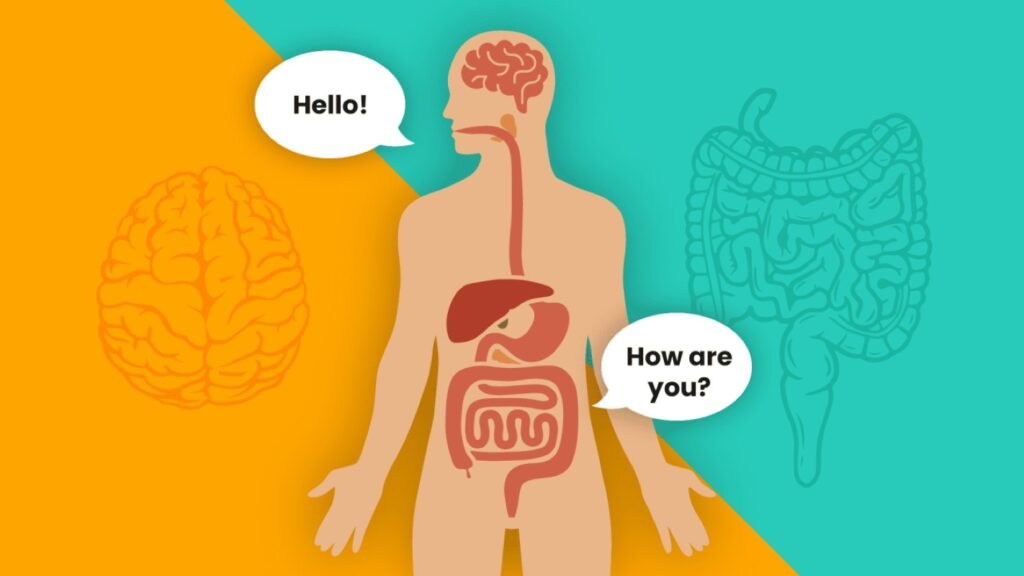
Also, studies on the science of hunger have found that the gut-brain axis can influence food cravings and hunger. Consequently, the balance, or make-up, of the gut microbiome at any given time may influence cravings, say for sugary or fatty foods, or even full-blown hunger. There are still ongoing scientific discussions about whether the gut microbiome causes food craving or a certain diet alters the prevalent microbes in the gut. However, it has been established scientifically that there is a relationship between the gut-brain axis and satiety cues.
Why Hunger Isn’t Just About Low Energy: Sensory & Emotional Triggers
Have you ever found yourself craving a certain food despite being physiologically full? Beyond health disorders, several other conditions may trigger such cravings.
Smell and Visual Cues
The smell and visual cues of an alluring food item may drive you to buy or taste it. Food marketers are exploiting such triggers to influence consumer food behavior in grocery stores around the world. For instance, stores that artificially release the scent of freshly baked bread into their conditioning systems found sales in the bakery section spiking. In such scenarios, shoppers are not driven to buy bread loaves by physiological hunger; sensory triggers do all the trick.

Emotional States
According to Harvard Health, stress could also cause an individual to engage in hedonic eating. Stress, acute or chronic, could result in high secretion of the cortisol hormone by the adrenal glands. By extension, this increases appetite and reward-driven eating. Such conditions could alter the body’s caloric sensing and cause unintended overeating.
Habit Loops
Have you noticed that you are likely to take coffee habitually, even when there’s no obvious need for it? Well, habitual consumption of food may also negate the science of hunger. For instance, when you snack at a particular time of the day, you’re likely to reinforce the habit even on days when you’re not hungry.
Social Conditions
Finally, there’s the concept that psychologists call ‘the herd mentality.’ It is suggested that individuals tend to mirror people like them after some period of exposure. This theory explains why people will eat at social gatherings, solely because other people are doing so, and not because they’re hungry themselves.
So, there you have some of the factors that may prompt individuals to override their physiological signals during reward-driven eating.
Why Some People Feel Hungrier Than Others
Beyond instances of hedonic eating, it has also been observed that some individuals possess obviously distinct appetites. Studies on the science of hunger have found some of these variations primarily due to physiological differences. The following list highlights some of the factors that may drive how hungry you feel, relative to other individuals maintaining a similar diet:
- Hormonal variations
- Genetics
- Ultra-processed foods (which may alter glycemic control and satiety signaling)
- Sleep durations (insomnia spikes ghrelin secretion)
- Diet quality
- Stress levels
ALSO READ: Why Fermented Snacks Are Exploding in Popularity — The Science Explained
Can You Train Your Hunger Cues?
Multiple studies have established the possibility of training your hunger pathways and appetite hormones. The science of hunger has proven the following recommendations as effective for training your hunger cues:
- Identify emotional eating for what it is, to reduce overeating.
- Eat slowly and mindfully to improve your ability to recognize satiety.
- Eat foods rich in prebiotics (e.g. fiber-rich meals) to nourish and balance the gut microbiome.
- Eat protein-rich and fiber-rich meals to prolong satiety.
- Time your meals consistently to stabilize hormonal rhythm.
Key Takeaway
Hunger is not solely governed by the absence of food in your stomach or of energy in the body. Instead, it is controlled by a combination of psychological cues, gut microbiome, brain pathways, and hormones. Once you understand how these mechanisms interplay, distinguishing between food cravings and hunger becomes easy. So, the next time someone tells you they’re hungry, a holistic inquiry may reveal they need more than food. Also, for folks struggling with weight loss, the key could just be an awareness of their hunger signals.
ABOUT THE AUTHOR

Babatunde Olufemi is a food scientist, educator, and science-based food writer with academic and practical exposure to food processing, nutrition, food safety, and the global food industry. Through Quill of Grubs, he breaks down complex food science topics into clear, accessible explanations for everyday readers, students, and professionals.