









The incidence of foodborne illnesses from cross-contamination in home kitchens is seldom as widely reported as similar occurrences in restaurants. This explains why the 2024 FoodNet data suggests that a whopping 58% of all foodborne illnesses are from foods eaten outside the home. However, a considerable amount of the foodborne diseases also occur in the home.
This article offers a scientific breakdown of the many ways that foodborne bacteria are transmitted in home kitchens. You’ll also get to learn about some common practices that cause bacterial transfer without people realizing.
What Is Cross-Contamination, Really? (A Quick Microbiology Explanation)
Cross-contamination is the unintended transfer of viruses, harmful bacteria, or other harmful substances from individuals, surfaces, or objects to food items. In some cases, cross-contamination in home kitchens can occur between multiple food items. From a microbiological perspective, such physical transfer of pathogens is considered to be the primary cause of foodborne diseases.

Most kitchen microbiology studies implicate E. Coli, Campylobacter, and Salmonella as the top pathogenic food contaminants. As explained earlier, there’s no clear-cut rule for how bacteria spread in the kitchen. In some cases, the transfer of pathogens or harmful chemicals may be from raw food materials to cooked edibles. In contrast, other possible routes of food cross-contamination are unwashed hands to kitchen surfaces or utensils, and eventually to food.
ALSO READ: 5 Real Reasons Why Ultra-Processed Foods Dominate Our Diets
The Biggest Culprit: Raw Poultry (And Why It Spreads So Easily)
Cross-contamination in home kitchens is the primary reason why washing chicken before cooking is risky. For example, studies show that raw chicken easily contaminates kitchen surfaces. Indeed, a CDC publication suggests that 1 out of every 7 people who clean their sink after washing chicken still have germ residues in it. Wondering how this happens? Well, it turns out that water splashes, which are almost inevitable at a sink, can propel bacteria as far as 2 feet outside the wash area.
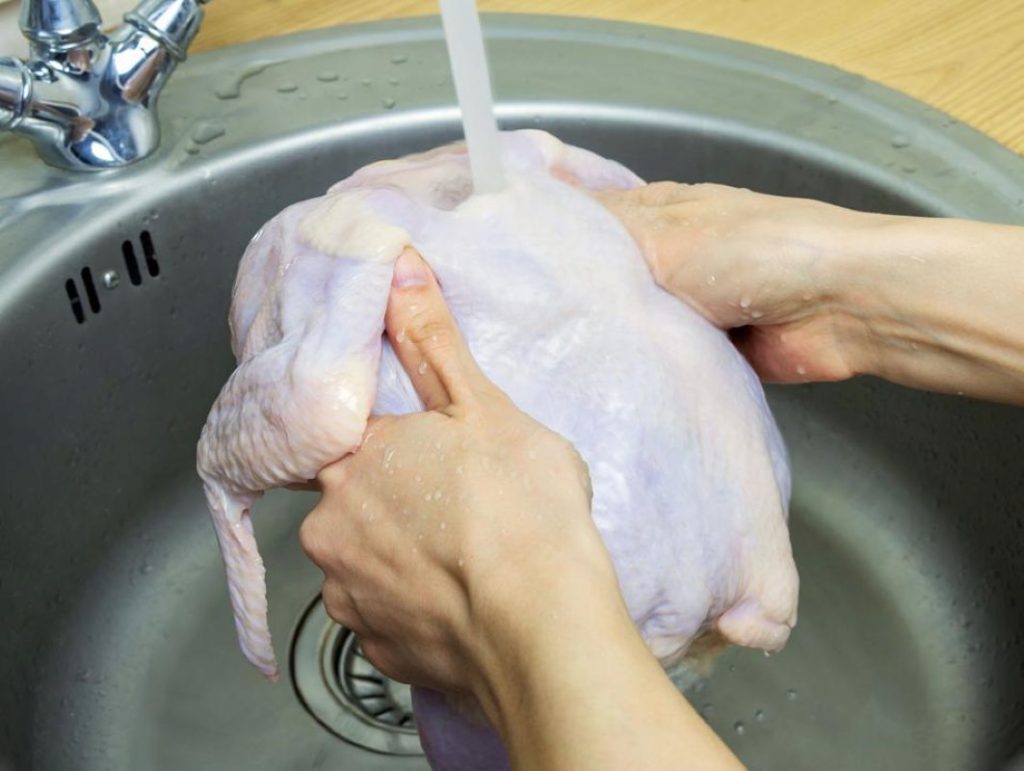
Consequently, sink contamination is not limited to the region directly under your faucet, but extends to a 2-foot radius around it. Beyond water splashes, germ transfer could also occur in the form of aerolized bacteria. This involves the mixing of microscopic bacteria like Campylobacter and Salmonella with mist-like water particles.
So, raw chicken contamination is not limited to kitchen surfaces and bowls; even the air could become contaminated with germs. So, handle your raw poultry with extra care.
Cutting Boards, Knives & Countertops: The Silent Bacterial Highway
Over the years, kitchen surfaces, both mobile and stationary, may develop porous surfaces. For utensils like cutting boards, grooves formed by sharp edges may not even be obvious during physical inspection. However, when such surfaces are made of plastic material, they tend to harbor pathogens easily. Some experts suggest that wooden cutting boards do not harbor pathogens like E. coli, as well as plastic boards. This affirmation, though, is still subject to widespread debate.
Multiple studies have found raw-cooked food cross-contamination in home kitchens to occur almost immediately. When cooked food touches a surface that has recently hosted some raw contaminated food, bacterial transfer occurs quite rapidly.

Now, simply wiping down a kitchen surface, like the sink or cutting board, after handling raw food may be insufficient. It is always best to wash cutting boards properly, dry them, and pat them down with a paper towel after each use. For cutting board safety, the USDA actually recommends having separate cutting boards for raw food items like seafood, poultry, and meat. Similarly, you can have a different one for bread and fresh produce. Preferably, the two boards should be color-coded to tell them apart.
Relatively similar rules apply to knife handles and countertops.
The Most Contaminated Item in the Kitchen? The Sponge
During random inquisitions, most people would classify sponges as pro-kitchen hygiene items. Alas, sponge bacteria could easily spread across the kitchen if this singular item is not used discreetly. Multiple studies conclude that sponge bacteria are some of the most prominent causes of cross-contamination in home kitchens. The worst-managed sponges may host more bacteria than your average toilet seat.

Unfortunately, sponges are tactile and wont to spread whatever goodies they hold in their porous mass. Consequently, a dirty sponge is the grand emissary of kitchen contamination. Bacteria thrive in warm and moist environments, which is almost always the condition of kitchen sponges.
Some common alternatives that could help reduce the spread of sponge bacteria are frequent disposal or microwaving replacement. However, these mitigations are largely unsustainable. Frequently throwing away sponges after each use is not cost-effective, and microwaving sponges could result in fire hazards. However, dish brushes and Swedish dishcloths are great alternatives as they are easy to clean and dry.
Your Hands Are the #1 Vector for Kitchen Bacteria
It may be difficult for most people to admit, but the evidence of human contribution to cross-contamination in home kitchens is glaring. Many people often forget to wash their hands before handling food in a home kitchen. In some cases, folks remember to wash their hands, but do it hurriedly and improperly. Imagine washing your hands under a running faucet for less than three seconds and rushing off to grab an apple off the dining table.
Unfortunately, bacteria can be quite fastidious once they contact the human skin, all thanks to skin oil (sebum). Indeed, the hands are likely to commit more cross-contamination during meal preparation. For context, health-conscious folks are likely to wash their hands thoroughly before cooking commences. However, after the initial handwashing, we often let our guards down. For instance, many individuals seldom wash their hands between raw vs cooked handling. Also, right after stuffing and placing the turkey in the oven, you may wind up touching phones, unlidding spice jars, and touching random kitchen surfaces without giving handwashing a thought.
The way out? Wash your hands as often as possible. Of course, you don’t have to become manic about the entire thing. However, make thorough handwashing right after handling raw food a top priority. It doesn’t matter if the next item you’re touching is another raw food, some cooked leftover, or the oven mitt; please wash those hands!
High-Risk “Forgotten” Spots You Don’t Realize Spread Germs
Some overlooked surfaces also contribute to cross-contamination in home kitchens. Because these areas of the kitchen are often stealthy under the watch of the hygiene police, they pose a special kind of hazard. Examples of such spots in the kitchen are:
- Spice jars (most people hurriedly grab them right after handling raw meat)
- Reusable grocery bags (reusable, but seldom washed)
- Blender lids
- Towels and dishcloths (they are not self-cleaning, please)
- Salt and pepper shakers
- Faucet knobs
- Refrigerator door handles
Imagine washing your hands thoroughly under a running faucet, and recontaminating them right after by squeezing the dirty knobs. Paying more attention to these often neglected kitchen surfaces should do the trick.
ALSO READ: Is Aluminum Foil in the Oven a Health Risk? What Experts Say About Cooking with Foil
6 Science-Backed Tips to Break the Chain of Cross-Contamination
After reviewing multiple scientific studies that assess the spate of cross-contamination in home kitchens, the following tips stood out as recommendations:
- Clean your kitchen sink and its splash zone, and the entire faucet, daily.
- Be more mindful of food handling transition points, and wash your hands for 20 seconds before such transitions.
- Always use a food thermometer for cooking methods that involve killing pathogens through heat processing. Visual cues are not reliable for ascertaining the doneness of cooked foods.
- Endeavor to air-dry kitchen surfaces after cleaning.
- Replace sponges, brushes, and washcloths as regularly as possible.
- Color-code all your chopping boards.
Many families spend a lot of time in the kitchen. Consequently, the ubiquity of human traffic sometimes makes cross-contamination in home kitchens more serious. However, the foodborne illnesses emanating from the home’s meal factory could be cut down with some degree of care. Just a few tweaks, and science-backed changes, and your kitchen is likely to transform into a hygienic haven.
Once you understand the microbiology, keeping your kitchen safe becomes much easier.
ABOUT THE AUTHOR

Babatunde Olufemi is a food scientist, educator, and science-based food writer with academic and practical exposure to food processing, nutrition, food safety, and the global food industry. Through Quill of Grubs, he breaks down complex food science topics into clear, accessible explanations for everyday readers, students, and professionals.